OSHA fall protection requirements
Published 2026-09-04 · 11 min read · updated 2026-10-18 (rule text re-read) · sources checked 2026-09-04
Subpart M is short, blunt and almost entirely about one number. Above 6 feet in construction, an employee at an unprotected edge has to be protected — and OSHA names exactly which systems count. This is the whole standard in plain language, with the criteria each system has to meet, read from the current text at osha.gov.
The duty, in one sentence
1926.501(b)(1): each employee on a walking or working surface with an unprotected side or edge 6 feet (1.8 m) or more above a lower level shall be protected from falling by a guardrail system, a safety net system, or a personal fall arrest system. Everything else in Subpart M is either a variation on that sentence for a specific kind of work, or the engineering criteria the chosen system has to meet.
Two things follow that people miss. First, the duty is the employer’s, not the worker’s — it is a duty to provide protection, and it attaches before the work starts. Second, the three named systems are not a menu of equally good options: on most decks a guardrail removes the hazard for everyone who walks past, while a harness only protects the person wearing it.
Warning
Where the 6-foot rule bites
1926.501(b) walks through the situations one by one. These are the ones that come up on almost every jobsite, quoted from the current text:
| Situation | Section | Trigger | Systems named |
|---|---|---|---|
| Unprotected sides and edges | 1926.501(b)(1) | 6 ft | Guardrail, net, or PFAS |
| Leading edges | 1926.501(b)(2)(i) | 6 ft | Guardrail, net, or PFAS — or a written plan when infeasible |
| Hoist areas | 1926.501(b)(3) | 6 ft | Guardrail or PFAS |
| Holes, including skylights | 1926.501(b)(4)(i) | more than 6 ft | PFAS, covers, or guardrails around the hole |
| Excavation edges | 1926.501(b)(7) | 6 ft | Guardrails, fences, or barricades |
| Low-slope roofs | 1926.501(b)(10) | 6 ft | Guardrail, net, PFAS, or a warning-line combination |
| Steep roofs | 1926.501(b)(11) | 6 ft | Guardrail with toeboards, net, or PFAS |
| Wall openings | 1926.501(b)(14) | 6 ft outside, under 39 in inside | Guardrail, net, or PFAS |
Read from 29 CFR 1926.501 on 2026-09-04.
The wall-opening rule is the one that surprises people. It only bites when the outside bottom edge of the opening is 6 feet or more above a lower level and the inside bottom edge is less than 39 inches above the walking surface — a low sill is what makes it a fall hazard rather than a window.
The numbers each system has to hit
1926.502 is where the standard stops describing situations and starts specifying hardware. A system that does not meet these numbers is not one of the three named systems, whatever the catalogue calls it.
Top edge height of top rails, or equivalent guardrail system members, shall be 42 inches (1.1 m) plus or minus 3 inches (8 cm) above the walking/working level. When conditions warrant, the height of the top edge may exceed the 45-inch height, provided the guardrail system meets all other criteria of this paragraph. Note: When employees are using stilts, the top edge height of the top rail, or equivalent member, shall be increased an amount equal to the height of the stilts.
Guardrail systems shall be capable of withstanding, without failure, a force of at least 200 pounds (890 N) applied within 2 inches (5.1 cm) of the top edge, in any outward or downward direction, at any point along the top edge.
When the 200 pound (890 N) test load specified in paragraph (b)(3) of this section is applied in a downward direction, the top edge of the guardrail shall not deflect to a height less than 39 inches (1.0 m) above the walking/working level.
Each safety net (or section of it) shall have a border rope for webbing with a minimum breaking strength of 5,000 pounds (22.2 kN).
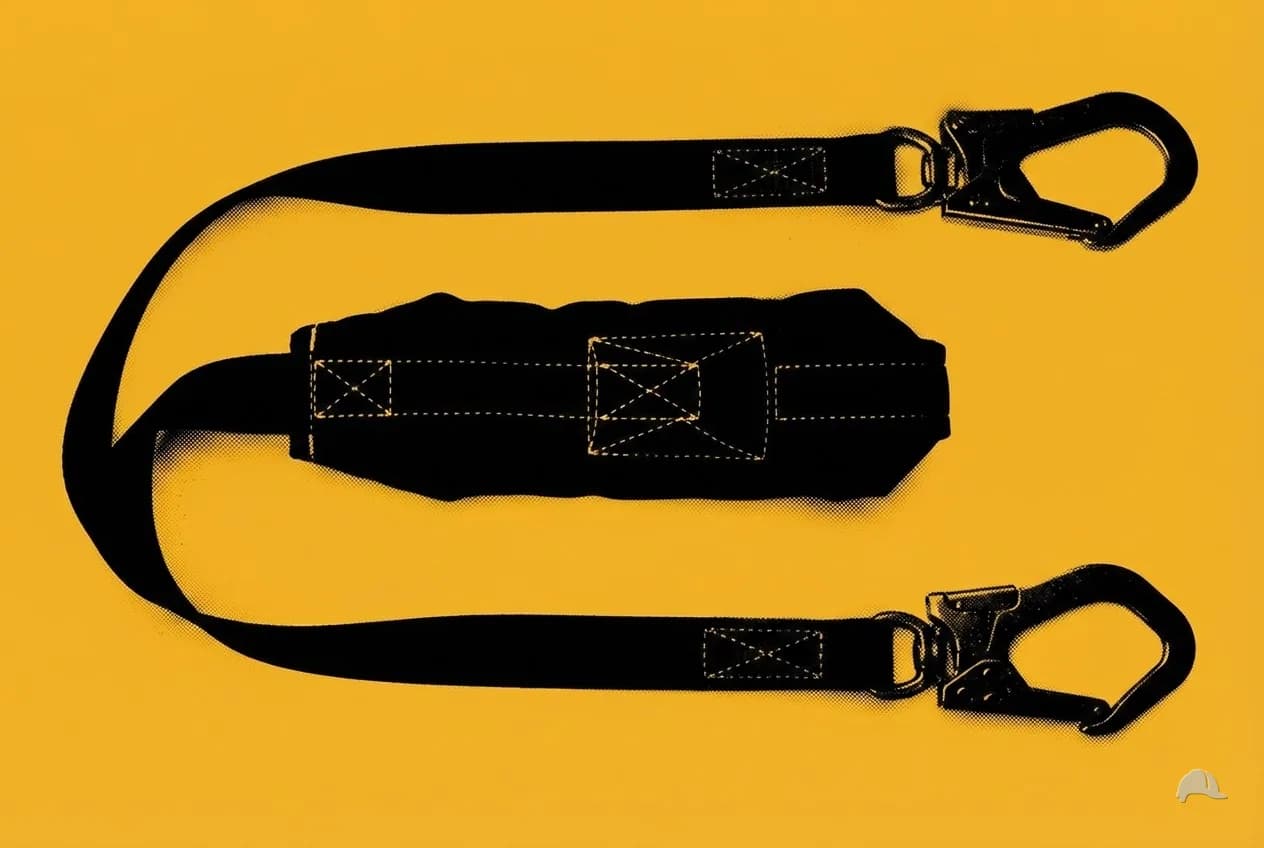
Personal fall arrest systems, when stopping a fall, shall: … (ii) limit maximum arresting force on an employee to 1,800 pounds (8 kN) when used with a body harness;
Personal fall arrest systems, when stopping a fall, shall: … (iii) be rigged such that an employee can neither free fall more than 6 feet (1.8 m), nor contact any lower level;
Personal fall arrest systems, when stopping a fall, shall: … (iv) bring an employee to a complete stop and limit maximum deceleration distance an employee travels to 3.5 feet (1.07 m);
Notice
The exceptions, and what they cost
Two escape hatches exist and both are expensive in paperwork. On leading-edge, precast-concrete and residential work, 1926.501(b)(2)(i) lets an employer who can demonstrate that conventional systems are infeasible or create a greater hazard implement a written fall protection plan under 1926.502(k) instead. That plan is site-specific, prepared by a qualified person, kept at the jobsite, and it has to name a controlled access zone and a safety monitor.
The second is the roofing carve-out. On a low-slope roof 50 feet or less in width, 1926.501(b)(10) permits a safety monitoring system alone, without a warning line. Wider than 50 feet, the monitor has to be paired with a warning line or a conventional system. Under 1926.502(f)(1)(i) the warning line goes not less than 6 feet from the roof edge when mechanical equipment is not in use.
If you are reaching for either exception, build the plan document before the crew mobilises, not after an inspector asks for it.
Training and the competent person
1926.503 requires a training program, delivered by a competent person, covering the nature of the hazards, the correct erection and use of each system in play, the role of each employee in a safety monitoring system, and the limitations on mechanical equipment. Retraining is required when the workplace changes, the systems change, or the employee’s understanding is clearly inadequate.
"Competent person" is a defined term, not a compliment. Under 1926.32(f) it is someone capable of identifying existing and predictable hazards and who has authorisation to take prompt corrective measures to eliminate them. If your designated person cannot stop the work, the designation fails on the second half of the definition. There is more on this in the competent person guide.
The general training duty sits one layer up in 1926.21(b)(2): the employer shall instruct each employee in the recognition and avoidance of unsafe conditions and the regulations applicable to their work environment.
What a fall protection citation costs
OSHA’s published maximums, effective after January 15, 2026:
| Violation type | Maximum penalty |
|---|---|
| Serious | $16,550 per violation |
| Other-than-serious | $16,550 per violation |
| Posting requirements | $16,550 per violation |
| Failure to abate | $16,550 per day beyond the abatement date |
| Willful or repeated | $165,514 per violation |
Read from osha.gov/penalties on 2026-09-04. State-plan states set their own levels, at least as effective as federal.
Fall protection has led OSHA’s most-cited list for over a decade, and the failure-to-abate line is the one that turns a single guardrail into a recurring daily charge. More on how citations progress in OSHA penalties and citations.
Sources, with the date each was read
- 29 CFR 1926.501 — Duty to have fall protection (OSHA)read 2026-09-04
- 29 CFR 1926.502 — Fall protection systems criteria and practices (OSHA)read 2026-09-04
- 29 CFR 1926.32(f) — Definition of competent person (OSHA)read 2026-09-04
- OSHA Penalties — maximum amounts effective after Jan. 15, 2026read 2026-09-04