Harness Inspection Checklist
1926.502(d)(21) requires personal fall arrest systems to be inspected prior to each use for wear, damage and other deterioration. This is that inspection, written out so a foreman can hand it to a new hire and get a consistent answer.
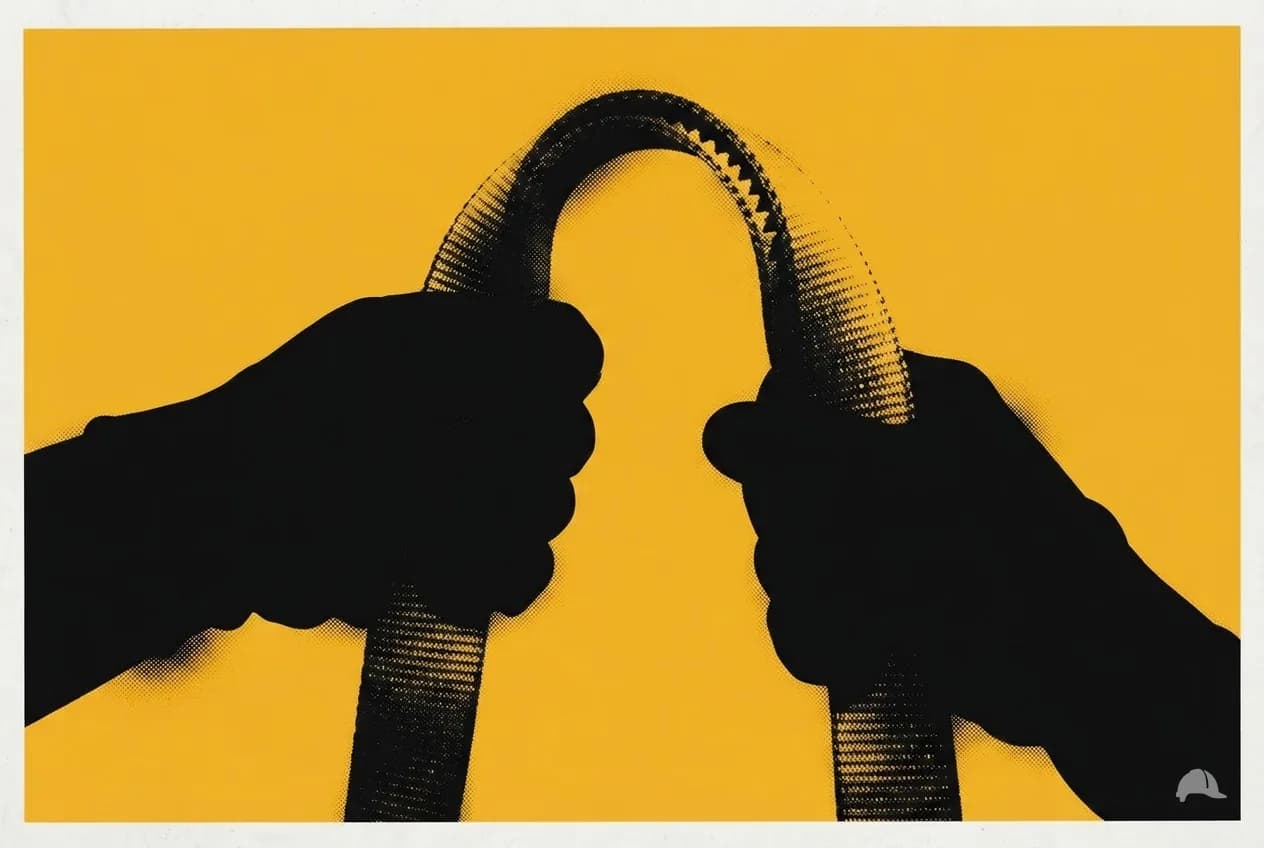
Work top to bottom, both sides of every strap. Anything you find on this list takes the harness out of service — 1926.502(d)(19) says a defective component is removed from use, not repaired on the tailgate.
0 / 20 checked
The rule behind the checklist
Two clauses do the work. 1926.502(d)(21): personal fall arrest systems shall be inspected prior to each use for wear, damage and other deterioration, and defective components shall be removed from service. 1926.502(d)(19): personal fall arrest systems and components subjected to impact loading shall be immediately removed from service and not used again until a competent person inspects and determines they are undamaged and suitable for reuse.
Danger
The check nobody writes on the form
The inspection above finds hardware faults. It does not find the failure that actually kills people, which is insufficient clearance below the anchor. Before the first climb of the day, do the arithmetic:
| Component | Worst case |
|---|---|
| Free fall | up to 6 ft — 1926.502(d)(16)(iii) |
| Deceleration distance | up to 3.5 ft — 1926.502(d)(16)(iv) |
| Worker height below the D-ring | roughly 5 ft |
| Safety margin | your call, never zero |
Read from 29 CFR 1926.502(d)(16) on 2026-09-04.
A 6-foot lanyard from a foot-level anchor needs well over 14 feet of clear space. On a low deck, a self-retracting lifeline anchored overhead is the honest answer, not a shorter lanyard and optimism. The arithmetic is worked through in at what height does OSHA require fall protection.
Rescue is part of the system
1926.502(d)(20) requires the employer to provide for prompt rescue of employees in the event of a fall, or to ensure that employees are able to rescue themselves. A suspended worker is on a clock, and "call 911" is a plan only if you have timed the response and the responders can reach the anchor.
Record the rescue arrangement on the fall protection plan, not in someone’s head.